
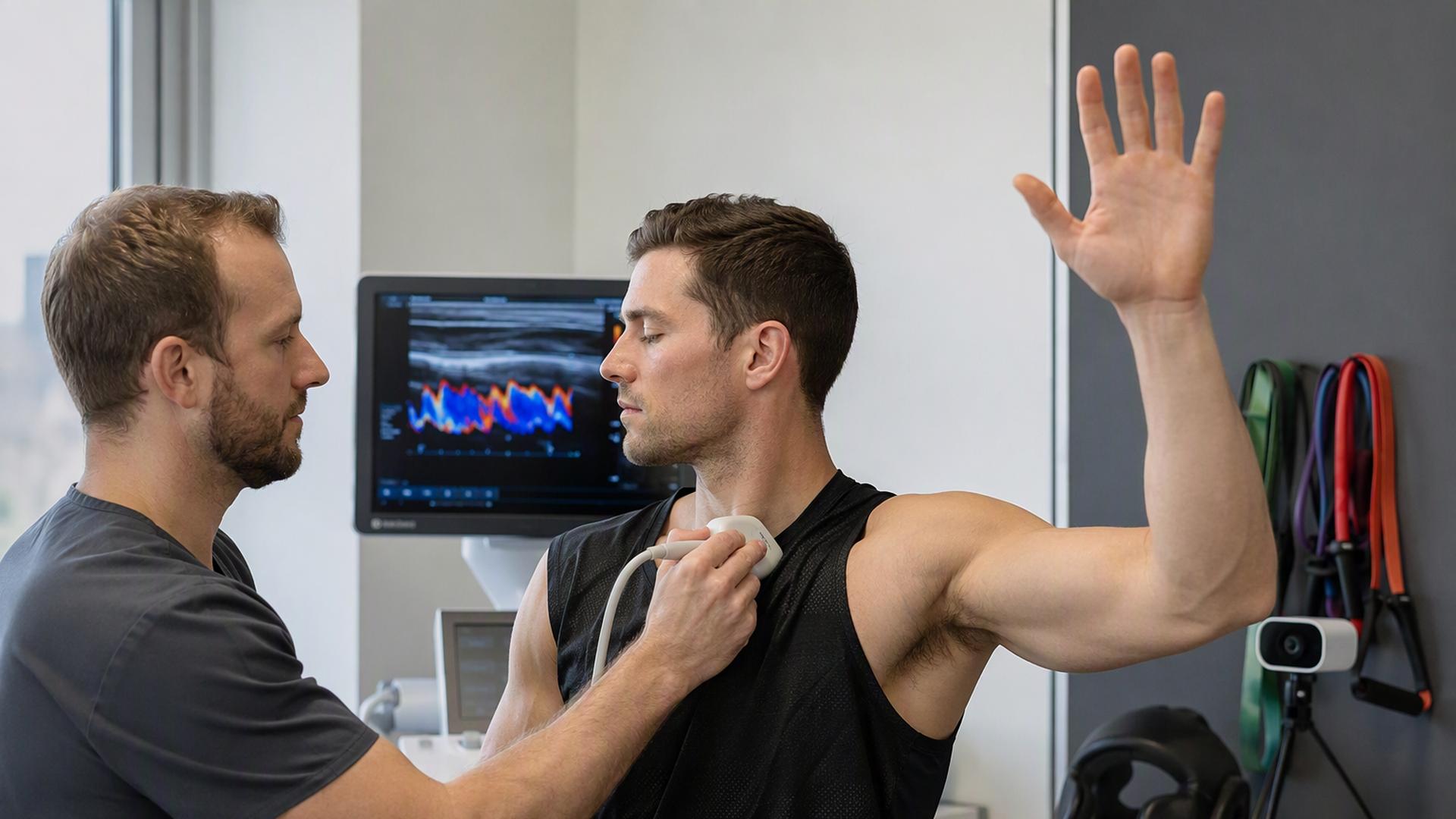
Shoulder and Arm Numbness in Fighters: Thoracic Outlet Syndrome Explained
Pins and needles in the fingers after a hard grappling session are easy to dismiss. A cold hand, a weak grip or an arm that goes heavy when raised overhead is harder to ignore, and when the symptoms keep returning, the cause may lie not in the arm but in the narrow passage between the neck and the armpit.
Why fighters get arm symptoms that start in the neck
Combat sports load the neck, collarbone and first rib in ways few other activities do. Repeated overhead work, heavy bag training, clinching, wrestling and chokes all strain the muscles that sit above the first rib. Over time the scalene muscles in the neck can thicken and tighten, and the space the nerves and vessels travel through can narrow.
The practice of Mr Marco Scarci, a consultant thoracic surgeon, publishes a page on thoracic outlet syndrome diagnosis and treatment that describes the condition as one of the most commonly misdiagnosed in medicine, and it reports an average delay of around 18 months between the start of symptoms and a correct diagnosis. It says patients are often investigated for conditions of the arm while the thoracic outlet itself is rarely examined.
For a fighter, that delay can mean months of lost training and a string of normal scans. Knowing the pattern helps people ask the right question.
What the thoracic outlet is
The thoracic outlet is the passage between the base of the neck and the armpit, bounded by the collarbone, the first rib and the scalene muscles. The nerves of the arm, known as the brachial plexus, and the main artery and vein to the arm all travel through it.
A narrative review in the Journal of Clinical Medicine, available as a review of thoracic outlet syndrome, defines the syndrome as a group of disorders that result in compression of the brachial plexus and the subclavian vessels as they leave the thoracic outlet. It says causes range from congenital anomalies to repetitive motion injuries, and that chronic poor posture can shorten the scalene and pectoral muscles and constrict the outlet.
Three forms are recognized, depending on what is squeezed. Neurogenic thoracic outlet syndrome involves the nerves and is by far the most common. Arterial and venous forms involve the artery or the vein, are less common and can be serious.
Anatomy explains why fighters are exposed. The first rib and collarbone form a narrow gap, and muscles that bulk up with training sit close to it. A previous collarbone fracture, a healed rib injury or an extra rib at the base of the neck can narrow it further, so two people with the same training can have very different risks.
Symptoms and what they can be mistaken for
Nerve compression typically causes pain in the neck, shoulder or arm, numbness or tingling in the fingers, especially the ring and little fingers, and weakness or clumsiness of the hand. Symptoms often worsen with the arm raised, as when drying hair, driving or working overhead, and may be worse at night.
Arterial involvement can cause a cold, pale or bluish hand, fatigue of the arm with little effort and a weaker pulse. Venous involvement can cause swelling, heaviness and a bluish discoloration of the arm, sometimes after hard exertion.
Many other conditions look similar, including carpal tunnel syndrome, a pinched nerve in the neck, rotator cuff problems and elbow nerve entrapment. Some people have more than one at once. This overlap is the main reason the diagnosis is missed, and it is why an examiner who looks at the neck and chest, as well as the arm, can make the difference.
How the diagnosis is made
Diagnosis is mainly clinical. The practice states that the diagnosis is primarily made by an experienced examiner and describes provocation tests, including Adson's test, in which the radial pulse is felt while the head is turned and the neck extended, and the Roos test, in which the arms are held raised while the hands open and close. A positive result reproduces symptoms or weakens the pulse.
Imaging has a supporting role. A chest X-ray can show an extra rib, and CT, MRI or nerve studies may exclude other conditions. For suspected arterial or venous forms, ultrasound or contrast scans of the vessels are used, and these can be urgent.
A scalene muscle injection is sometimes used both to test and to treat. The practice says that if it produces significant temporary relief, it confirms that the scalene muscles are responsible for the compression and helps predict the outcome of surgery. It is not a guarantee, though.
Treatment and returning to training
Most people start with conservative treatment. The review notes that first-line therapy is conservative and may include physical therapy, lifestyle changes, anti-inflammatory medicine and injections of steroid or botulinum toxin. For fighters, that means changing training loads, correcting posture, improving shoulder blade control and breathing mechanics and building strength in a balanced way.
Surgery is considered when conservative care fails or when the artery or vein is involved. The operation usually removes the first rib and may release the scalene muscles, which gives the nerves and vessels more room.
Sudden swelling, discoloration or pain in an arm after exertion needs urgent medical attention, because it can signal a blood clot in the vein. Anyone who has this should go to an emergency department rather than wait for an appointment. The same goes for a hand that turns white or blue, loses its pulse or becomes suddenly weak, as these suggest that blood flow is threatened and time matters.